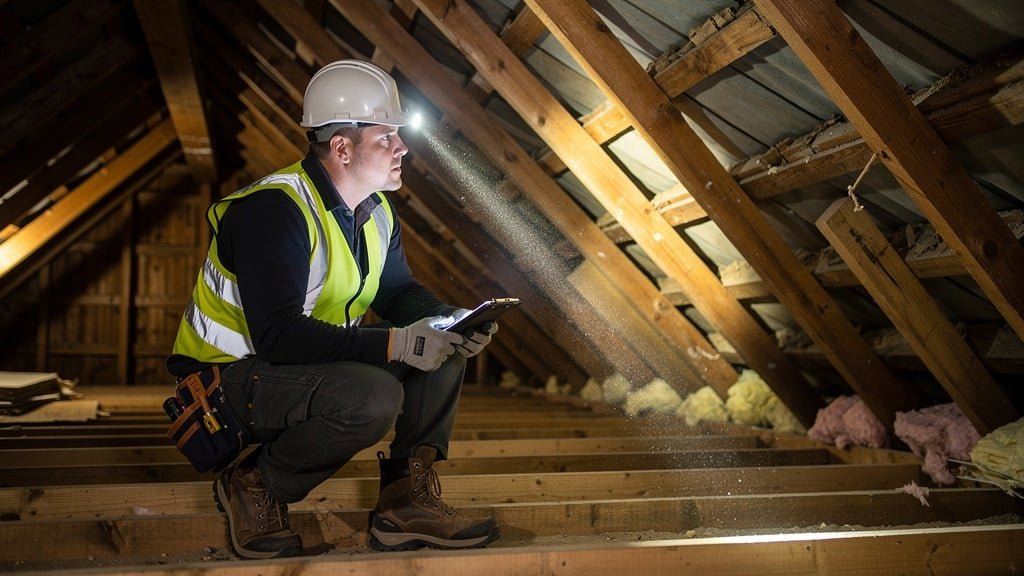
Asbestos was extensively used in UK construction from the 1950s until banned in 1999. As surveyors inspecting properties across Sutton, we regularly encounter asbestos-containing materials (ACMs) in homes built before 2000. Understanding asbestos risks, identification, and safe management is crucial for property buyers, homeowners, and anyone planning renovations.
What is Asbestos?
Asbestos is a naturally occurring mineral fiber prized for its heat resistance, strength, and insulation properties. It was used in over 3,000 building products. When disturbed, asbestos releases microscopic fibers that, if inhaled, can cause serious lung diseases including mesothelioma, asbestosis, and lung cancer.
Three Types of Asbestos:
- White Asbestos (Chrysotile): Most common, 95% of asbestos used in UK buildings. Found in cement products, insulation, ceiling tiles.
- Brown Asbestos (Amosite): Second most common. Used in pipe insulation, ceiling tiles, insulation boards. More dangerous than white asbestos.
- Blue Asbestos (Crocidolite): Most dangerous type but rarely used in domestic properties. Occasionally found in specialist insulation applications.
Common Asbestos Locations in Sutton Properties
Properties built or refurbished between 1950-2000 may contain asbestos in numerous locations:
Highest Risk Areas:
- Asbestos cement roofing sheets: Garage roofs, shed roofs, outbuilding roofs (corrugated or flat sheets)
- Asbestos insulation boards (AIB): Fire protection around boilers, airing cupboards, behind fuse boxes, partition walls, ceiling tiles
- Artex/textured coatings: Decorative ceiling and wall finishes applied before mid-1980s
- Floor tiles: Vinyl floor tiles and adhesives in kitchens, bathrooms, hallways
- Pipe lagging: White/grey insulation around hot water pipes, especially in basements
- Asbestos cement flues: Chimney and boiler flues (white/grey cement pipes)
- Soffit boards: Under eaves, particularly in 1960s-1980s properties
- Window putty: Historic glazing putty in older timber windows
- Bath panels: Removable bath side panels in older bathrooms
Less Common Locations:
- Toilet cisterns and seats (pre-1970s)
- Water tanks in lofts (cold water storage)
- Gaskets and rope seals around stoves/boilers
- Bitumen roofing felt backing
- Decorative plasterwork and coving
- Composite door panels
Important: Asbestos-containing materials in good condition pose minimal risk if left undisturbed. The danger arises when materials are damaged, drilled, sawed, sanded, or otherwise disturbed, releasing fibers into the air. Never attempt DIY removal or disturb suspected asbestos materials.
Health Risks & Safety
Asbestos fibers are 50-200 times thinner than human hair - invisible to the naked eye. Once inhaled, they lodge in lung tissue causing serious diseases:
Mesothelioma
Type: Cancer of lung/chest lining
Latency: 20-50 years after exposure
Prognosis: Usually fatal, average survival 12-21 months
UK Deaths: Approximately 2,500 annually
Asbestosis
Type: Lung tissue scarring
Latency: 10-40 years after exposure
Symptoms: Shortness of breath, persistent cough, chest pain
Prognosis: Progressive, no cure, reduces life expectancy
Lung Cancer
Type: Malignant tumor in lungs
Latency: 15-35 years after exposure
Risk Factor: Smoking combined with asbestos exposure increases risk 50-fold
Prognosis: Variable, early detection crucial
Critical Point: There is no safe level of asbestos exposure. Even brief exposure can cause disease decades later. However, undisturbed asbestos in good condition poses minimal risk - proper management is key.
Asbestos Surveys: Types & Costs
Management Survey (Type 2)
Purpose: Identify presence, location, and condition of asbestos-containing materials during normal occupation.
When needed: Properties built before 2000, landlord legal requirement, before property purchase, general awareness
What's included: Visual inspection of accessible areas, sampling suspicious materials, laboratory analysis, risk assessment, management plan
Cost for typical Sutton property:
- 1-2 bed flat: £200-£350
- 2-3 bed house: £300-£500
- 4 bed house: £400-£600
Turnaround: Report within 5-7 days including lab results
Refurbishment/Demolition Survey (Type 3)
Purpose: Identify ALL asbestos before refurbishment, renovation, or demolition work - intrusive and destructive inspection.
When needed: Before any building work (extensions, loft conversions, renovations), legal requirement for contractors, demolition projects
What's included: Comprehensive inspection including destructive investigation (lifting floorboards, accessing voids), extensive sampling, detailed register of ALL ACMs
Cost:
- Small area (single room): £300-£500
- Whole property: £500-£1,200
- Large/complex properties: £1,000-£2,000+
Turnaround: 7-10 days including lab analysis
Asbestos Removal Costs
Licensed contractors must remove high-risk asbestos (insulation boards, pipe lagging, sprayed coatings). Low-risk materials (cement products in good condition) can sometimes be managed without removal.
| Material/Location | Risk Level | Removal Cost |
|---|---|---|
| Artex Ceiling (single room) | Medium | £400-£800 |
| Asbestos Insulation Board (small area) | High | £500-£1,500 |
| Pipe Lagging (typical house) | High | £1,000-£3,000 |
| Garage Roof (cement sheets) | Low | £500-£1,200 |
| Floor Tiles (single room) | Low | £300-£700 |
| Whole House Asbestos Removal | Varies | £3,000-£15,000+ |
Additional Costs: Air testing after removal £200-£400, waste disposal included in quotes (licensed landfill required), encapsulation (sealing) as alternative £20-£40/m² where appropriate.
Legal Obligations
For Homeowners:
- No legal requirement for owner-occupiers to survey or remove asbestos
- Duty of care: Don't expose others to asbestos risks knowingly
- Planning work: Obtain refurbishment survey before renovations
- Disposal: Must use licensed contractors for removal and disposal
- Property sale: Disclose known asbestos presence on TA6 form
For Landlords:
- Legal requirement: Management survey mandatory for rented properties built before 2000
- Asbestos register: Must maintain register of ACMs location and condition
- Management plan: Assess risks, implement control measures, regular re-inspection
- Duty to manage: Control of Asbestos Regulations 2012 - failure can result in prosecution
- Tenant information: Inform tenants of asbestos location and safe management
Safe Management of Asbestos
If asbestos-containing materials are in good condition, leaving them undisturbed is often the safest option:
Management Strategy:
- Identify: Commission asbestos survey to locate and assess ACMs
- Record: Create register documenting location, type, condition of all ACMs
- Assess Risk: Evaluate likelihood of disturbance and potential exposure
- Label: Mark asbestos locations with warning labels (optional for homes)
- Monitor: Regular inspections (annually) to check condition hasn't deteriorated
- Inform: Tell contractors, tradespeople before any work commences
- Review: Update management plan when circumstances change
When to Remove vs Manage:
Remove if:
- Material damaged or deteriorating
- High risk of disturbance
- Planning renovations affecting area
- Accessible to children/occupants
- Causing anxiety
Manage/Leave if:
- Good condition, intact surfaces
- Unlikely to be disturbed
- Low-risk location (sealed ceiling voids)
- Removal more disruptive than managing
- Cost-benefit favors management
Buying Property with Asbestos
Discovering asbestos during property purchase shouldn't necessarily prevent sale, but requires careful consideration:
Decision Framework:
Questions to Ask:
- What type of asbestos and where located?
- What condition is it in?
- How accessible/likely to be disturbed?
- Are you planning renovations that would disturb it?
- What are removal/management costs?
Negotiation Options:
- Price reduction: Deduct removal cost plus 20-30% contingency
- Seller removal: Request seller arranges professional removal before completion
- Management plan: Accept property with asbestos, manage safely (if low risk)
- Independent survey: Commission specialist asbestos survey for detailed assessment
- Insurance consideration: Confirm buildings insurance covers asbestos presence
Concerned About Asbestos?
Our building surveys identify potential asbestos-containing materials. We can arrange specialist asbestos surveys and provide expert advice.
Get Expert AdviceFrequently Asked Questions
About the Author
Richard Henderson MRICS
RICS Chartered Building Surveyor
Richard has 15 years' experience identifying potential asbestos-containing materials during property surveys across Sutton. He works with UKAS-accredited asbestos surveyors and licensed removal contractors to provide comprehensive advice on managing asbestos safely and cost-effectively.