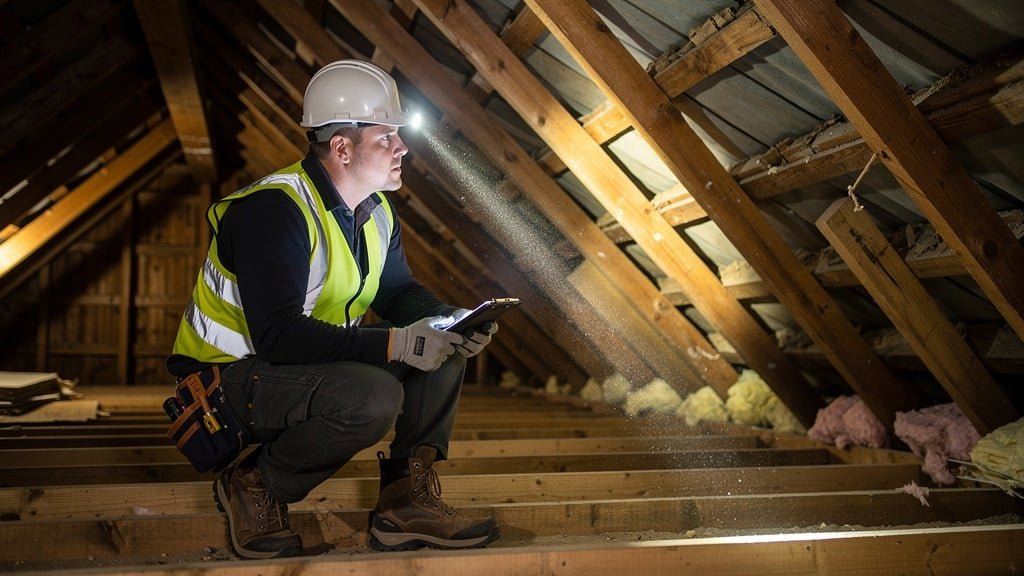
Flat roofs are common on extensions, garages, and modern properties across Sutton. While cost-effective and space-efficient, flat roofs are prone to specific problems that can cause water ingress, structural damage, and expensive repairs. As surveyors, we regularly assess flat roof conditions and advise homeowners on maintenance, repairs, and replacement options.
Common Flat Roof Problems
1. Ponding Water (Most Common Issue)
Ponding occurs when water pools on the roof surface rather than draining away. This indicates inadequate falls (slopes) - flat roofs should have minimum 1:40 gradient toward drainage points.
Consequences of Ponding:
- Accelerated deterioration: UV degradation increased in standing water areas
- Felt/membrane stress: Weight of water causes sagging and stretching
- Increased leak risk: Water finds any weakness in waterproof layer
- Algae growth: Green staining indicates biological growth
- Structural overloading: Excessive water weight can stress roof joists
Solution: Improve falls through additional insulation layers or complete re-covering. Cost: £1,000-£3,000 depending on area.
2. Blistering & Bubbling
Blisters appear as raised bubbles in felt roofing caused by trapped moisture vapor between layers. Common in older torch-on felt and built-up felt systems.
Causes & Solutions:
- Moisture trapped during installation: Poor installation technique or wet substrate
- Solar heating: Sun heats trapped moisture causing expansion and lifting
- Poor ventilation: Inadequate roof void ventilation causes condensation
Repair: Small blisters can be cut out and patched (£150-£300 per blister). Extensive blistering requires complete re-covering (£40-£90/m²).
3. Splits & Cracks
Felt roofing splits as it ages and loses flexibility. Thermal movement causes expansion/contraction leading to cracking, particularly at joints and edges.
High-Risk Areas for Splitting:
- Upstand details (where roof meets walls)
- Around roof penetrations (soil pipes, vents)
- At laps and seams between felt sheets
- Parapet wall junctions
- Drip edges and verges
Temporary Repair: Roof repair tape or mastic (£50-£150). Permanent Solution: Re-covering required if splits are widespread (£2,000-£5,000 for typical extension).
4. Failed Upstands & Flashings
Where flat roofs meet walls, proper detailing is critical. Failed upstands (felt turned up wall face) are a major leak source. Inadequate height (should be minimum 150mm), poor fixing, or degraded flashings cause water ingress.
Proper Detail Requirements: Upstand minimum 150mm above roof surface, metal flashing covering upstand and dressed into wall, secure mechanical fixing or lead flashing alternative. Repair Cost: Re-do upstands £300-£800 per wall, depending on length and access.
5. Blocked or Inadequate Drainage
Gutters and outlets becoming blocked with leaves, moss, and debris prevent water drainage. Undersized gutters can't cope with rainfall volume from flat roof areas.
- Symptoms: Overflowing gutters, water running down walls, internal damp patches
- Prevention: Twice-yearly gutter cleaning (spring & autumn) - £80-£150
- Upgrade: Install larger gutters or additional downpipes - £400-£1,200
Flat Roof Covering Types
Built-Up Felt Roofing (Traditional)
Description: Three layers of bitumen-impregnated felt bonded together with hot bitumen. The traditional flat roofing system common on older properties in Sutton.
Lifespan: 10-15 years with maintenance
Cost: £40-£60 per m²
Pros: Economical, established technique, readily available contractors
Cons: Shorter lifespan, prone to blistering, requires regular maintenance
Torch-On Felt (Modern Felt)
Description: Modified bitumen felt with polyester or fiberglass reinforcement, torch-applied using propane burners. Currently the most popular felt system.
Lifespan: 15-20 years
Cost: £50-£75 per m²
Pros: Better flexibility, improved durability, good value for money
Cons: Fire risk during installation, still requires periodic maintenance
Single-Ply Membrane (EPDM Rubber)
Description: Large rubber sheets mechanically fixed or bonded to roof deck. Increasingly popular for DIY and professional installations.
Lifespan: 30-50 years
Cost: £60-£90 per m²
Pros: Excellent longevity, single-layer system, minimal joints, low maintenance
Cons: Higher upfront cost, vulnerable to puncture, requires skilled installation
GRP Fiberglass (Cold-Applied)
Description: Layers of fiberglass matting bonded with polyester resin creating seamless waterproof surface. Same material used for boat hulls.
Lifespan: 25-30 years
Cost: £80-£120 per m²
Pros: Seamless finish, very durable, resistant to ponding, can create shaped details
Cons: Expensive, requires dry conditions for installation, skilled application needed
Liquid Applied Membranes
Description: Cold-applied liquid rubber coatings brushed or rolled onto existing roof surface. Ideal for repairs and refurbishment.
Lifespan: 20-25 years
Cost: £45-£70 per m² (over existing felt)
Pros: Can coat over existing felt, seamless, good for complex shapes, quick installation
Cons: Skill-dependent finish quality, multiple coats needed, temperature-sensitive curing
Repair vs Replacement Decision
Repair if:
- Roof is less than 10 years old
- Only localized damage (single area under 2m²)
- No widespread deterioration visible
- No internal water damage occurred
- Budget constraints require phased approach
- Emergency temporary measure until funds available
Replace if:
- Roof over 15-20 years old
- Multiple areas of damage across surface
- Persistent leaking despite previous repairs
- Visible general deterioration (cracking, brittleness, splits)
- Extensive blistering or delamination
- Structural concerns with deck or joists
- Planning extension or loft conversion (opportunity to upgrade)
Typical Costs for Sutton Properties
| Work Type | Typical Size | Cost Range |
|---|---|---|
| Patch Repair (Felt) | Under 1m² | £150-£350 |
| Garage Roof (Torch-on Felt) | 15-20m² | £900-£1,500 |
| Extension Roof (EPDM) | 20-30m² | £1,800-£2,700 |
| Extension Roof (GRP Fiberglass) | 20-30m² | £2,400-£3,600 |
| Large Flat Roof (Torch-on) | 40-50m² | £2,500-£3,750 |
Additional Costs: Scaffolding £400-£800, insulation upgrade £15-£30/m², timber deck replacement £25-£40/m², fascia/soffit renewal £30-£50 per linear meter.
Maintenance Tips
Regular Maintenance Schedule:
- Twice-yearly inspection: Spring and autumn visual checks for damage
- Gutter clearing: Remove debris preventing drainage (April & October)
- Remove vegetation: Clear moss, algae, and any plant growth promptly
- Check upstands: Ensure flashings secure and waterproof seal intact
- Clear outlets: Roof outlets and drainage points kept clear of blockages
- Inspect after storms: Check for wind damage, lifted edges, or debris impact
- Professional survey: Every 3-5 years for detailed condition assessment (£200-£400)
Warning Signs of Serious Problems: Internal water staining on ceilings below roof, sagging or uneven roof surface, visible ponding lasting 48+ hours after rain, widespread cracking or splits, soft or spongy areas when walking on roof. If you observe these signs, arrange professional survey immediately - delays worsen damage and increase repair costs significantly.
Concerned About Your Flat Roof?
Our surveyors provide expert flat roof condition assessments and advice on repair vs replacement decisions.
Book Roof SurveyFrequently Asked Questions
About the Author
Daniel Cooper MRICS
Chartered Building Surveyor & Party Wall Specialist
Daniel has 18 years' experience surveying flat roofs across South London. He specializes in defect diagnosis, specification writing for flat roof repairs and replacements, and advising homeowners on cost-effective roofing solutions for properties in Sutton and surrounding areas.