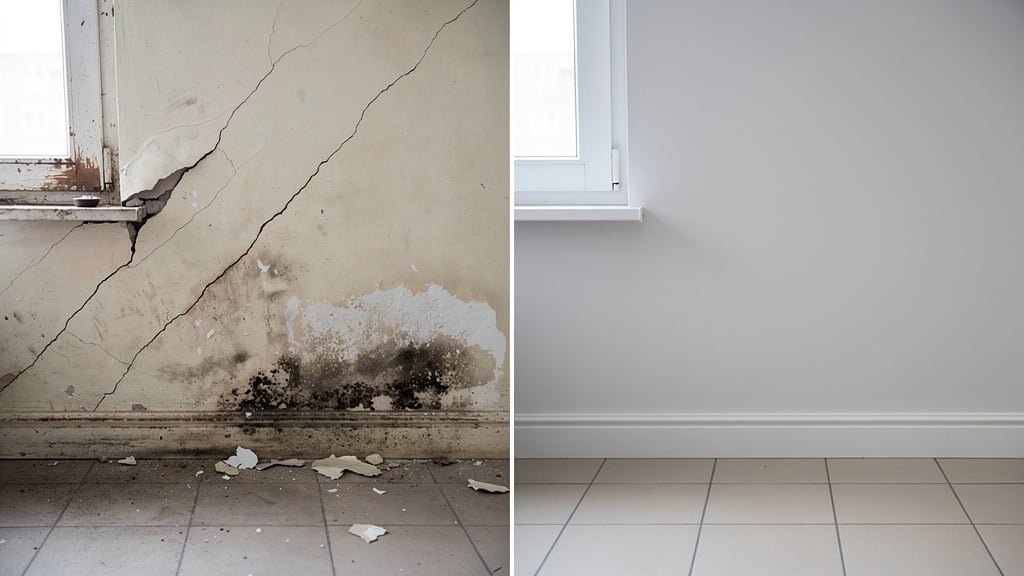
Subsidence is one of the most serious structural issues affecting properties in South London. The clay soil prevalent throughout Sutton and surrounding areas makes properties particularly vulnerable to ground movement, especially during dry summers and wet winters. As surveyors specializing in structural defects, we regularly investigate subsidence concerns and help homeowners understand their options.
What is Subsidence?
Subsidence occurs when the ground beneath a building moves downward, causing the property foundations to sink. This typically happens when clay soil shrinks during dry periods or when tree roots extract moisture from the ground. Unlike settlement (normal consolidation in new buildings), subsidence is progressive and requires remedial action.
Types of Ground Movement:
- Subsidence: Downward movement due to soil shrinkage or ground loss
- Settlement: Consolidation of soil under building weight (common in new builds)
- Heave: Upward movement when clay soil swells with moisture
- Landslip: Sloping ground movement on hillsides
Why Sutton Properties Are Vulnerable
South London, including Sutton, sits on London Clay - a highly shrinkable soil that expands when wet and contracts when dry. This seasonal movement creates significant subsidence risk, particularly for properties built before 1950 with shallow foundations.
High-Risk Factors in Sutton:
- London Clay subsoil with high plasticity index
- Mature trees (oak, willow, poplar, ash) common in established residential areas
- Victorian/Edwardian properties with shallow strip foundations (less than 1m deep)
- Extended dry summers causing severe soil desiccation
- Drainage problems leading to localized ground conditions
- Mining/historic excavations in certain Sutton areas
Warning Signs of Subsidence
Early detection is crucial. During building surveys in Sutton, we look for these telltale signs:
Cracking (Most Common Sign)
- Diagonal cracks running at 45° angles from windows/doors
- Width greater than 3mm (visible gaps, not hairline cracks)
- Wider at top than bottom (tapered pattern)
- External and internal cracks in same location
- Recent appearance or worsening of existing cracks
Doors and Windows
- Doors sticking or not closing properly
- Windows difficult to open/close
- Gaps appearing around window/door frames
- Frames pulling away from walls
Floors and Ceilings
- Sloping or uneven floors
- Cracks between walls and ceilings
- Rippling wallpaper or torn wallcoverings
- Skirting boards separating from walls
External Signs
- Visible lean to walls or chimney stacks
- Cracked or bulging render
- Steps in brickwork joints
- Extension pulling away from main house
Important: Not all cracks indicate subsidence. Hairline cracks under 1mm are often cosmetic. Horizontal cracks may indicate different issues like thermal movement or wall tie failure. Always consult a surveyor for accurate diagnosis.
Common Causes in Sutton
1. Tree Root Activity (Most Common)
Trees extract significant moisture from clay soil, causing shrinkage. Mature trees can draw water from 1.5-2 times their height radius. In Sutton's tree-lined streets, this is the primary subsidence cause.
High-Risk Trees (Common in Sutton):
- Oak: Very high water demand, roots spread widely
- Willow & Poplar: Highest water consumption trees
- Ash: Large root systems, high moisture requirement
- Elm: Extensive shallow root systems
- Lime & Plane: Common street trees with moderate risk
- Fruit trees: Lower risk but still relevant if close to buildings
2. Leaking Drains
Water escaping from damaged drains or pipes can wash away supporting soil (erosion subsidence) or cause clay swelling beneath one part of the building while other areas remain stable.
3. Poor Construction Quality
Inadequate foundations, particularly in Victorian/Edwardian properties. Many Sutton homes were built with shallow brick footings (500-800mm depth) insufficient for clay soil conditions.
Investigation & Monitoring
When subsidence is suspected, we recommend a systematic approach:
Investigation Process:
- Initial Surveyor Inspection (£400-£800): Assess crack patterns, measure widths, examine site conditions, identify likely causes
- Crack Monitoring (3-12 months): Install tell-tales or graduated studs to measure movement over time. Essential for insurance claims
- Structural Engineer Assessment (£800-£1,500): Detailed structural analysis if active movement confirmed
- Site Investigation (£1,500-£3,000): Trial pits, boreholes, and soil analysis to determine foundation depth and ground conditions
- Drainage Survey (£300-£600): CCTV inspection if drain damage suspected
- Tree Survey (£400-£800): Arboricultural assessment identifying species, proximity, water demand
Repair Solutions & Costs
Option 1: Tree Management (£500-£5,000)
If trees are the cause, options include:
- Pruning/Crown reduction: Reduces water demand (£500-£2,000 per tree)
- Pollarding: Severe reduction maintaining tree (£800-£1,500)
- Removal: Last resort, requires planning permission if protected (£1,500-£5,000+)
Note: After tree management, properties may experience heave (upward movement) as soil rehydrates. Monitoring continues for 2-3 years. Many insurance companies prefer managing trees before considering underpinning.
Option 2: Underpinning (£10,000-£50,000+)
Underpinning strengthens foundations by extending them to stable ground below the shrinkage zone. Typical techniques:
Traditional Mass Concrete Underpinning:
Sequential excavation beneath existing foundations, filling with reinforced concrete. Most common method.
Cost: £1,000-£1,500 per linear meter
Piled Underpinning:
Mini-piles driven to stable ground (8-15m depth), then connected to foundations via concrete needles. Faster, less disruptive.
Cost: £1,200-£2,000 per linear meter
Option 3: Resin Injection (£5,000-£15,000)
Modern technique injecting expanding resin beneath foundations to stabilize and lift settled ground. Less invasive than traditional underpinning, but not suitable for all situations.
Insurance & Subsidence
Most home insurance policies cover subsidence damage, subject to excess (typically £1,000-£2,500). Key points:
- Claim early: Notify insurers as soon as subsidence suspected
- Monitoring required: Insurers usually require 9-12 months of crack monitoring before approving repairs
- Loss adjusters: Insurer appoints surveyor to assess claim validity and recommend repairs
- Future premiums: Subsidence claims may increase premiums or require specialist insurance
- Property value impact: Professionally repaired subsidence with insurance-backed guarantees has minimal long-term value impact
Buying a Property with Subsidence History
Properties with repaired subsidence can be good value if properly investigated:
What to Check:
- Repair documentation: Request structural engineer reports, underpinning drawings, insurance claim details
- Guarantees: Look for insurance-backed guarantees (typically 10 years)
- Monitoring evidence: Review crack monitoring data showing movement has stopped
- Cause addressed: Verify underlying cause (tree removal, drain repairs) has been resolved
- Mortgage availability: Some lenders reluctant; specialist brokers can help
- Building survey: Essential to verify repairs adequately completed and no new movement
Concerned About Subsidence?
Our surveyors provide expert subsidence investigations and structural assessments across Sutton.
Book Your SurveyFrequently Asked Questions
About the Author
Richard Henderson MRICS
RICS Chartered Building Surveyor
Richard has investigated hundreds of subsidence cases across South London over 15 years. He works closely with structural engineers and arboricultural consultants to provide comprehensive subsidence assessments for homeowners and insurers in Sutton and surrounding areas.